Friday, 9 December 2016
6 Tips for Avoiding the Nightmare of Excess Baggage Charges
Your dream vacation is organized, your accommodation is scheduled, you’re imagining the views, sounds, in addition to smells ahead, and you’re counting down the days before you go. All of a sudden, your best hopes and dreams come crashing down around you. When its time to pack, and, it doesn't matter how much you sit on your luggage, you merely can’t get it to zip! Or you arrive at the airport terminal and are advised by the airline that the check-in bag is two pounds over weight! Or maybe you fail to sneak your carry-on past the gateway and never even the strength of a 1000 men might stuff it into that low cost airline’s small bag test device!
Excess baggage is really a tragic nightmare that many of today’s tourists must deal with, however, you can breathe a sigh of relief. There is help available. No matter if you’re filling your entire existence into one carry-on or even fighting the legendary battle of a checked bag’s weight limit, here are six strategies for staying away from those excess baggage charges.
Thoroughly take a look at baggage allowance
Never make any presumptions as to what baggage you’ll be permitted on a flight! Airlines’ guidelines vary quite a bit, and even a single airline’s limitations may vary from route to route. Always check out the airline’s website before flying, and, when you have any queries, give them a call up. What is the maximum size and weight for checked bags? Simply how much will they charge should you go over the restriction? (Hint: quite a bit!) How large can carry-ons be? Are you able to bring a personal item in addition to your carry-on, or even will you be limited to one item? Be sure to know all of this just before vacationing so you aren’t caught with any surprise fees.
Pack light
This could sound like the world’s biggest suggestion, but it’s easier. Have a real think about what you could possibly bid farewell to. Do you really need all those products? Can you bring laundry detergent and wash outfits as you go so you can re-wear these? Can you use space-savers like machine bags or all-in-one chargers? What can you buy on the road? It’s tempting to bring everything you could possibly imagine wanting, but the fewer goods, the happier (and also richer!) you’ll be!
If you observe my personal travel photos during the last 6-7 years, you may or may not spot me wearing this very same dress 55 times per trip to preserve luggage space.
Make use of a luggage scale
My personal luggage scale would be the handiest travel-related item My partner and i own. Getting everything under 50 pounds/23 kilos - especially when I’m packaging my life up along with moving abroad * can be a major wrestle, and this allows myself to add and remove goods from my luggage while at home so I’m not biting our nails in line for your check-in desk. Plus, because they scales are smaller than average light, you can bring them with you to re-weigh even after changing the contents of your baggage on your own travels. I’ve found that many airlines don’t weigh carry-ons even if they have a weight constraint, but some do, and also the scale is definitely constantly handy for checked out bags.
Wear Every thing!
If you’re a discount air carrier veteran, you may be very familiar with the practice of sporting approximately 300 tiers of clothing to be able to bypass strict bags limits. Over the years, I've got to admit I’ve become a complete pro at this. Exactly what are you looking at, individuals? It’s totally normal to use three shirts and a winter coat within 95 degree warmth. This Scottish boy music group singer became my personal spirit animal when it was reported that they passed out on an easyJet trip because he was putting on twelve layers regarding clothing. Mad value. Perhaps avoid putting your health in jeopardy, however, hey, you can consider it a personal challenge!
Buy a travel vest
Go ahead and take idea of wearing everything one step further and purchase your hair a travel vest. You may look ridiculous, yet, hey, technically you’re not really “carrying” all of this stuff about. Carryology has a great round-up involving some of the travel vests out there…and some actually appear pretty inconspicuous!
Stuff a take a trip vest - save luggage space
That one from Stuffa has Twelve secret pockets and looks pretty decent!
Ship your Baggage to the destination
If there’s no chance of limiting how much baggage you have, contemplate shipping it in your destination instead of transporting it with you on your own flight. This is especially beneficial if you’re planning to journey for a while and need to deliver belongings home however don’t want to lug all of them from destination to desired destination. If you’re based in or traveling either to or from Australia, Globe Baggage offers protected excess baggage transport. Their website will determine the shipping expense based on destination, volume, size, and bodyweight, which will allow you to pick your smartest and many economical plan of action. Additionally they provide real-time baggage following.

Friday, 11 November 2016
Thinking about relocating to Canada?
Contemplating relocating to Canada in the wake of Tuesday’s U.S. presidential election? It’s not as easy as it might seem.
Numerous celebrities - from celebrity Miley Cyrus to comedian Amy Shumer - threatened to relocate to Canada in the event that Mr . Trump had been elected. Comedian Jon Stewart seemingly is certainly going even farther, saying he’s “getting inside a rocket and going to a different planet, simply because obviously this planet’s gone bonkers.”
Launching a skyrocket might require less forms than trying to get residency in Canada.
“Some People in america really are a little surprised at just how defined the border is actually and that they already have to undergo an application procedure,” stated Rudi Kischer, a Canadian immigration lawyer, within an interview with CTV Vancouver. “It’s really pretty challenging to relocate to Canada.”
“Canada’s going to be in a higher position to take on world-wide issues that America’s going to offer the side,” said Cordell Jacks, 36, an international improvement worker in Calgary, British Columbia, in an meeting with The New York Periods.
Basically, there are four ways to get it accomplished - study at a new Canadian university, have a job there, wed a Canadian (there’s an internet site, MapleMatch.com, to help you connect), or wait.
And also wait.
Immigration administrators in Canada need only 300,1000 new permanent people in 2017. An estimated Forty,000 will be refugees and yet another 80,000 likely will be family members associated with Canadians. The remaining 180,500 mostly will be experienced workers who curently have applied to enter and are awaiting a years-long forms process, according to the CTV record
Canada also has the Express Entry software, but that process can be hard if you don’t already have work offer waiting up north.
Best work in Canada today? Immigration attorney.
One of those, Raj Sharma, told CTV Calgary he’s been inundated using calls from People in the usa, especially Mexican People in the usa, who are interested in relocating north. He said getting married a Canadian is needed you jump a number of the legal hoops, but, “It’s got to be obvious that this is not a fraud. This is not a backdoor way into Canada, and that we do investigate unions.”
Canadian Immigration officials, whose website gone down Tuesday night coming from all the American visitors coming its method following Donald Trump’s success, got in about the act.
On the other side from the border, Canadians reacted to Trump’s election win with concerns of their own, actually anxiety, but also a new whiff of pride.
Wednesday, 12 October 2016
Strategies for Residing Abroad: What Exactly You Need To Know Before Relocating To Another Country
For many, being able to operate and live in another country is a dream. However, some people might have a new disrupted view of the idea. It's not all about brand-new people and locations when it comes to starting a existence outside the country an individual call home. Prior to deciding on packing your bags and fleeing to another country, you need to assess certain things in your life.
Very first, you must recognize that your health will be completely different in comparison to your life at home. The actual Post says that one of the primary red flags is when you keep complaining about how it's completely different from how it was back home. You need to accept that you are on a different land, so you shouldn't expect it to be just like property.
The food may be different, the commute could be different - you need to find it within you to simply accept these changes and to adjust to them instead of constantly thinking that situations are better off at home.
Before taking the plunge, make sure that you've traveled a specific amount so that you more or less know which culture will fit you the best. You will know in which you belong once you start checking out.
Second, it's not all about wanderlust. An entry from International Expat states that moving to different international locations won't guarantee that you will find your happiness. While yes, you'll be having beautiful pictures of a new surroundings, that doesn't mean that you will be productive and energetic. It's more about your culture fit as opposed to just being in a place exclusively for the sake of it.
The decision to live overseas is one of those things that you need to think about, and not as easy as arranging airplane tickets on-line. Seeing the scenery of the world and becoming a neighborhood are two very different issues. Make sure that you're ready and that you have the right attitude for that big move.
Very first, you must recognize that your health will be completely different in comparison to your life at home. The actual Post says that one of the primary red flags is when you keep complaining about how it's completely different from how it was back home. You need to accept that you are on a different land, so you shouldn't expect it to be just like property.
The food may be different, the commute could be different - you need to find it within you to simply accept these changes and to adjust to them instead of constantly thinking that situations are better off at home.
Before taking the plunge, make sure that you've traveled a specific amount so that you more or less know which culture will fit you the best. You will know in which you belong once you start checking out.
Second, it's not all about wanderlust. An entry from International Expat states that moving to different international locations won't guarantee that you will find your happiness. While yes, you'll be having beautiful pictures of a new surroundings, that doesn't mean that you will be productive and energetic. It's more about your culture fit as opposed to just being in a place exclusively for the sake of it.
The decision to live overseas is one of those things that you need to think about, and not as easy as arranging airplane tickets on-line. Seeing the scenery of the world and becoming a neighborhood are two very different issues. Make sure that you're ready and that you have the right attitude for that big move.
Monday, 12 September 2016
The actual exit of shipping firms from Nigeria
With the Nigerian economy in economic downturn, the spiralling negative effects have already started to influence on the procedures of key sectors of the economy. One of the sub-sectors that's at the receiving end of the current economic depression will be the shipping business.
Moaning under extreme hardship because of government policies along with worldwide economic problems, the news from the Maritime sub-sector just isn't heartening, as over 20 shipping firms were reported to have exited the nation’s shores. As a result, no less than 3,000 dockworkers have been let go by numerous shipping firms, terminal operators and logistics firms. This is mostly due to lack of poor import policies recently introduced by the government. According to the Dockworkers Union of Nigeria (DUN), the massive retrenchment in the sub-sector was due to the Government inability to meet its joint venture obligation with the global oil companies that are major partners with the marine logistic companies.
The shipping traces exited our shoreline because of growing cutbacks resulting from declining traffic volumes and recent government import policy.
It'll be recalled that the Federal Government last year placed restriction on the importation of about Forty one items due to Foreign Exchange scarcity. But, federal government defended its actions and promised to encourage domestic production of some of the goods that could be developed locally. However, your shipping firms are generally complaining that the bar has adversely impacted their operations. Consequently, they are asking that the restriction be raised or else it will promote smuggling, diversion of boats to neighbouring international locations, leaving our ports virtually empty as well as general loss of earnings to government.
We urge the government and the relevant agencies in the maritime sub-sector to take reveal analysis of the complaints that have resulted in the departure of the shipping companies with a view to revive the smooth operations of the maritime industry.
While it's necessary to restrict the actual importation of goods that can be made locally and help save scarce forex, the value of the maritime industry of which shipping staff play a vital role mustn't be ignored. Statistics demonstrate that since this year, the volume of goods imported in to the country has shrunk by over 30 percent. This is because the shipping lines are reportedly shifting bottom to other West African countries in response to government new policy.
Authorities should review a few of the policies as it influences the shipping functions in our shores.
There is need to meet the joint venture obligations with the overseas oil companies, that are major partners from the sector.
Government must not allow the shipping sub-sector to lag behind from the global sector.
Our own country is enormously endowed with coastlines and also navigable inland waterways, along with strategically placed on the particular Atlantic Coast of West Africa. And 76 percent of transport business that takes invest the whole of Gulf Africa is apparently done in Nigeria. Which means that Nigeria should continue to be a key player in West Africa.
Therefore, government should do everything to contain the exit regarding shipping firms in your shores and help save the jobs of an incredible number of workers. According to Economic Intelligence that watches the maritime sub-sector, regardless of Nigeria’s large export of crude and importance of over 100 thousand tons of general shipment, no Nigerian flagship happens to be plying international routes.
Also, statistics from the Nigerian Plug-ins Authority (NPA) on deliver calls to the nation reveal that between Last year and 2012, Nigeria’s tonnage has grown from 82m tons to over 150m with an estimated freight payment of soaring from $4.1bn to previously mentioned $7.5bn annually. But the engagement of Nigerians remains nearly zero.
Although the exit of foreign shipping firms may be the chance our local shipping and delivery firms may be expecting, we doubt whether they have the capacity and skill now to fill the void without harming an already hemorrhage economy with its other adverse consequences. Govt should swiftly intercede and arrest much the same experience that observed the exit of some airlines to be able to neighbouring countries.
Moaning under extreme hardship because of government policies along with worldwide economic problems, the news from the Maritime sub-sector just isn't heartening, as over 20 shipping firms were reported to have exited the nation’s shores. As a result, no less than 3,000 dockworkers have been let go by numerous shipping firms, terminal operators and logistics firms. This is mostly due to lack of poor import policies recently introduced by the government. According to the Dockworkers Union of Nigeria (DUN), the massive retrenchment in the sub-sector was due to the Government inability to meet its joint venture obligation with the global oil companies that are major partners with the marine logistic companies.
The shipping traces exited our shoreline because of growing cutbacks resulting from declining traffic volumes and recent government import policy.
It'll be recalled that the Federal Government last year placed restriction on the importation of about Forty one items due to Foreign Exchange scarcity. But, federal government defended its actions and promised to encourage domestic production of some of the goods that could be developed locally. However, your shipping firms are generally complaining that the bar has adversely impacted their operations. Consequently, they are asking that the restriction be raised or else it will promote smuggling, diversion of boats to neighbouring international locations, leaving our ports virtually empty as well as general loss of earnings to government.
We urge the government and the relevant agencies in the maritime sub-sector to take reveal analysis of the complaints that have resulted in the departure of the shipping companies with a view to revive the smooth operations of the maritime industry.
While it's necessary to restrict the actual importation of goods that can be made locally and help save scarce forex, the value of the maritime industry of which shipping staff play a vital role mustn't be ignored. Statistics demonstrate that since this year, the volume of goods imported in to the country has shrunk by over 30 percent. This is because the shipping lines are reportedly shifting bottom to other West African countries in response to government new policy.
Authorities should review a few of the policies as it influences the shipping functions in our shores.
There is need to meet the joint venture obligations with the overseas oil companies, that are major partners from the sector.
Government must not allow the shipping sub-sector to lag behind from the global sector.
Our own country is enormously endowed with coastlines and also navigable inland waterways, along with strategically placed on the particular Atlantic Coast of West Africa. And 76 percent of transport business that takes invest the whole of Gulf Africa is apparently done in Nigeria. Which means that Nigeria should continue to be a key player in West Africa.
Therefore, government should do everything to contain the exit regarding shipping firms in your shores and help save the jobs of an incredible number of workers. According to Economic Intelligence that watches the maritime sub-sector, regardless of Nigeria’s large export of crude and importance of over 100 thousand tons of general shipment, no Nigerian flagship happens to be plying international routes.
Also, statistics from the Nigerian Plug-ins Authority (NPA) on deliver calls to the nation reveal that between Last year and 2012, Nigeria’s tonnage has grown from 82m tons to over 150m with an estimated freight payment of soaring from $4.1bn to previously mentioned $7.5bn annually. But the engagement of Nigerians remains nearly zero.
Although the exit of foreign shipping firms may be the chance our local shipping and delivery firms may be expecting, we doubt whether they have the capacity and skill now to fill the void without harming an already hemorrhage economy with its other adverse consequences. Govt should swiftly intercede and arrest much the same experience that observed the exit of some airlines to be able to neighbouring countries.
Tuesday, 2 August 2016
7 necessary funds tips to consider when moving abroad
Around 123,000 British residents emigrated from the British in 2015 according to the Workplace for National Statistics.
Popular destinations incorporate: Australia, France, the us, the United Arab Emirates and Canada.
Many leave for work-related reasons and also to move closer to family members or loved ones.
Thousands of people decide to move abroad every year and money is a big consideration when creating the leap. Basic a big decision, it’s well worth taking the time to visit the country you want to move to prior to a long-term commitment. In addition, ensure that you meet all the immigration and credit rules before turning out to be emotionally and fiscally attached to a specific nation.
If you’re thinking of functioning or retiring overseas, there are a number of functional financial considerations to take into account, according to Geraint Davies, the Md of Surrey-based Montfort International which usually specialises in global financial planning. Every client situation is constantly different. The key, as a result, is to ensure that your economic planning is ‘conjoined’.
He or she explains: “Getting a financial program in place is not a high end. Moving abroad will usually result in a change to your own financial circumstances including: personal tax, inheritance tax, pensions, property, savings and opportunities. Exchange rates will also have an impact on how you plan your finances hence the need for any conjoined plan.”
Here are Half a dozen practical money tricks to help with your transfer abroad.
1. First steps
Take half the particular stuff and twice as much money as you need. This is a travel mantra that applies to quick voyages and everlasting ones. When moving abroad you have to afford renting or investing in a place, flights, moving, storage, visas, legal fees and putting in place an urgent situation cushion. It is more affordable and easier to only consider essentials and consider offering stuff you don’t need -- like that battered previous sofa - for additional cash before you go. If at all possible pay off debts. Should you be unable to do this make contact with creditors before you go to prevent any future economic headaches.
2. Living cost
Moving from the UK to a different country might be cheaper - a town like Berlin is a lot more affordable than Birmingham, while South Africa is great value for money but has its own downsides, like a higher crime rate for instance. Australia, Switzerland as well as certain Scandinavian countries such as Norway are some of the most high-priced countries in the world to advance to. Therefore it is crucial that you consider the kind of lifestyle you plan to lead inside your destination country of course, if you can still afford to are living there comfortably if your exchange rate shifts against you.
3. Fix exchange rates
Using something called a forwards contract allows you to repair a rate with Entire world First for up to 36 months based on the currency fee at the time of booking and provide you a guaranteed rate at which to exchange. This means you will know exactly how much cash you get in the future it doesn't matter what the currency market will in the meantime. However, any post-Brexit UK has ended in a weaker Fantastic British Pound (Sterling), which means the single pound, doesn’t stretch as far as this did in most cases.
4. How to send money abroad
Using a currency broker, like Planet First, is a safe and sound, secure and cheaper way to transfer cash abroad and, unlike with most banks, UK-based non-public clients are not incurred fees. Independent research shows that someone buying £10,500 worth of euros using World First could get as much as 3% more than they could do with their financial institution.* You can also set up regular international gets in pay bills or match commitments and, since global exchange rates will almost always be fluctuating, you can use the currency broker’s free charge alert service.
5.Tax is demanding
Settling your taxes affairs between your new house and the UK can be be extremely complicated - specifically if you have investments or property. It is really worth getting expert advice to help you understand the rules greater and to ensure that you aren't paying tax double when retiring or working abroad. Check out tax arrangements of the us you are heading to. Whatever you pay in tax will vary from place to place, and also the rules may be a little different. Also, should you be leaving the UK to call home abroad permanently or going to work in another country full-time for at least a full taxes year you must explain to HM Revenue and Customs (HMRC).
Davies from Montfort adds: “You need to look at this individually and holistically because it is almost all connected. Some purchases that are tax free in the UK, for example ISAs, are not tax free in other jurisdictions like Australia. So when it comes to property you also need to consider do you know the best options for you - this might consist of selling, changing ownership or remortgaging. The right time to of your move in foreign countries can reduce your duty liabilities.”
6. Transfer your pension
Most people who retire overseas have two sources of income: a state pension and a private or perhaps employer pension. In case you are retiring abroad you have to investigate how transferring overseas may impact any benefits or perhaps retirement income you get.
You may be able to move your UK type of pension savings to an overseas pension scheme Known as a Qualifying Recognized Overseas Pensions Plans (QROPS).
Davies from Montfort says: “For a few there are tax advantages to using them but for other individuals a move can cause drawbacks. This is especially true when whatever you thought was a QROPS wasn’t! As discovered by some any time HMRC reduced the number of plans it recognises just lately.
“QROPS are not a financial item, they are a facility offered by HMRC so they don’t fit everyone. When considering moving your pension ensure you explore all possibilities and get proper holistic financial advice in order that the advice is match and proper. Some overseas firms are generally notorious for telling you all the positives yet rarely those all-important disadvantages. The advice must be well balanced.”
7. Consider healthcare
Health insurance can be high-priced, especially in North America, and unlike the UK most health care systems are not free at the point of delivery. In case you are moving abroad on the permanent basis, you will not be entitled to medical treatment from your NHS, because it the residence-based healthcare system. Consequently, before leaving for your brand-new destination, it’s important to check out what health services are available to you for the reason that country. Budgeting for just about any additional healthcare expenses you may face, like regular health insurance installments, is important regardless of how healthy you are.
Thursday, 28 July 2016
The Way To Arrange A Car For Transportation
Examine Your Car Extensively regarding Active Damage Prior to Shipment
Look for and doc any pre-existing damages. This can be done in a few simple steps:
Carefully wash your car.
Produce a written report of the chips, dents, scratches or other cosmetic damage.
Take pictures of your car from several angles along with close-up shots associated with a damage.
Date the photographs as well as written record.
Verify that the transporter creates an official note along with your own personal records.
Remove Customized Products and private Items
Your vehicle will be looked over, loaded and unloaded numerous times whilst being transported. For that reason, it will more than likely travel unlocked. Decrease the likelihood of theft by getting rid of custom stereos, after-market video and DVD players, TVs, Gps navigation Systems, radio faceplates and detachable CD players. Ship these products separately.
Don't pack your car or truck with personal items. Dean Xeros, a business expert as well as the General Manager of uShip Motors, cites this among the commonest slip-up that people make when shipping their cars. “Your transporter will won't transport your car if it's full of your personal possessions. It's the transporter’s obligation to deliver your car, not to move your personal items. In addition, vehicle transporters aren't certified to transfer goods, so achieving this could result in fees and penalties.”
Make sure to take away all personal items in the interior of the car, including the trunk. An automotive transporter’s insurance is not going to include any personal items inside your vehicle. These products might change throughout transport and cause immense problems for your car. You will be held liable should your items affect another vehicle or the transport truck. Furthermore, these items will prove to add to the weight with the vehicle, that will impact the price and speed of service.
Take out Toll Tags and Parking Passes
Remove or deactivate any kind of toll tags or parking passes for your car. These items might be charged continually en route to the location. Furthermore, they're valuable and is targeted for theft.
Prepare Your Vehicle for Transportation
even though your car may end up being driven minimally throughout the transportation process, it ought to nonetheless stay in good driving condition. In accordance with Dean Xeros, inoperable vehicles may be shipped, but the transporter must know in advance to enable them to make the proper preparations. For operable vehicles, mechanical issues could cause unforeseen delays and damages. Therefore, you need to carry out a routine maintenance check before shipping your car.
Have a look at robs list of preparations below:
-Ensure the battery includes a full charge which the tires are properly inflated.
-Fill up all fluids in the car
-Run down your gas tank to a 1 / 4 or eighth full. An almost-empty tank will save weight that assist
keep your shipment moving along quickly.
-Keep close track of the automobile for a few weeks just before shipment. Should there be leaks or mechanized problems make sure the car owner knows.
-Vehicles with leaks should not be put on the top rack of the multi-car carrier simply because they can drip around the vehicles below.
-Record mechanical problems and take note of any unique steps needed to drive your car off and on the trailer (including problems starting or stopping your vehicle). Give these instructions to the driver.
Prepare for on / off loading
Arrange your car to be loaded on and off your car transporter’s truck or trailer to assist them to deliver the car easily. Remember, the greater you prepare your car for shipment, the much more likely it will arrive on time and with out damages.
If you have a convertible, make sure the top is secured as thoroughly as you possibly can to prevent damage from air, debris, or moisture. If you fail to secure the top, add additional safety having a wind-resistant tarp.
Fold back your mirrors along with retract the antenna. Any specialty items, like fog lights, ground effects or spoilers should be secured or removed.
Finally, switch off or disable your car alarm. If you cannot disable the alarm, provide detailed, written instructions for your driver regarding how to turn off the alarm just in case it's triggered.

Tuesday, 5 July 2016
Changing home: Five ways to ensure that your move goes without a hitch
Relocating home is some thing a lot of us dread. Whether it’s the trouble associated with packing up all our worldly belongings or the strain of taking boxes all the way up flights of stairs, it’s not a activity we could relish.
Then one on the toughest aspects of shifting is frequently discovering the right person or company to help you get from A to B.
1. Become organised
When you have made a decision it's actually time to get a change, it’s never too early to talk to your mover. A great mover should be able to assist you with every aspect of your move, and quite often plenty of this comes before the special day.
Don’t result in everything to the very last minute, and be sure you stay talking to the business you've selected to make sure every thing goes smoothly.
2. Check out their experience
When you are looking into moving and packing organizations, be aware of BAR badge accreditation. This will likely show that the organization are associated with the British Association of Removers, providing you with self-assurance for their quality and standards.
The Which? Trusted Trader authorization scheme also tells you which other customers are actually happy with their move - consumer confidence is crucial whenever figuring out a reputable firm.
3. Less may not be more
While many people may ultimately be working to a budget, a cheap offer will finish up costing more.
Often the fine print - or loss of it - can lead to unexpected charges right then and there of moving, or a inexpensive estimate could suddenly skyrocket. Look for a completely transparent, set rate and constantly insist on a property survey and a comprehensive written quote.
4. Create a visit
If you’re keeping your products just before moving, always take a trip to inspect the firm’s storage services - you’ll want to make sure your belongings are going someplace safe.
It’s additionally a wise decision to prevent using different mover and safe-keeping companies as, in the event that anything goes completely wrong, it’s difficult to establish who is responsible.
5. Phone friends
There’s almost nothing like a good recommendation in terms of getting a tradesman or service. Ask friends and family that they have used in the past, and look for independent testimonials on sites such as Which? Trusted Traders or Reference Line.

Thursday, 9 June 2016
12 Very Important Tips For Relocating Abroad
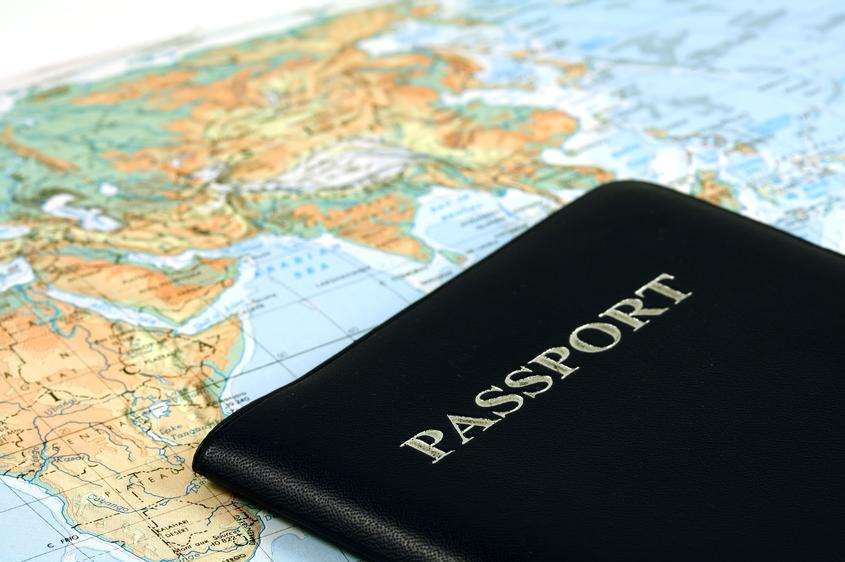
Moving overseas is probably the many liberating, satisfying experiences I’ve had. Before I left for London all I did was picture how much fun I was gonna be experiencing as I was living there as well as exploring the globe, I didn’t really think about the nuts and bolts with moving until the time came. It had been mind-boggling and there was a heap to complete, a lot of things I hadn’t looked at. If you’re planning a relocate abroad, this is my tips to help you with all the move.
If perhaps you’ve been lucky enough to relocate overseas before, what exactly are the top tips? I’d love tohear all of them and I also understand others would certainly truly appreciate your advice too.
Sell your stuff
In the months before your departure, execute a large spring-clean and start saving money all the stuff you don’t want to retain like clothes, furniture, trinkets, Cds, Dvds, video games, books etc. Find a nearby flea marketplace then arrange for hosting a stall, you’ll be amazed what folks are interested and you could easily make a few hundred pounds funds to line your pockets with, right before you go.
Keep rest
Once you weigh it up, it can be quite cost-effective to store your larger items instead of selling them all then having to re-purchase once you go back home in one year or two. Look around for a great storage facility and make certain they have got satisfactory protection, regularly deal with for unwanted pests and they are protected from fire or flood. Fort Knox Storage space is often a reliable company and it has lots of areas in Queensland. Spend money on high quality packaging supplies, like boxes, packaging foam, bubble wrap and tape, Packqueen is a good place to begin.
Send over your essentials
Knowing you can’t survive the coming years on the contents of one bag, send several of the items over in advance. Such things as books, laptops and garments will be sent abroad utilizing a business like World Baggage. This means you don’t need to spend a fortune re-feathering your nest and it’s particularly useful if you’re spending time traveling before arriving in your last destination. You don’t want solid jackets as well as wintry weather clothing taking your treasured baggage room when you’re investing two months backpacking asia before you relax London.
Insurance coverage
Should you have a position arranged, you have to check with your new employer if you’re covered by the insurance and just what, specifically, you're protected for. If your new workplace insures you for medical, be sure you understand exactly what is covered. If you’re not covered, you may need to consider long-term travel cover.
Passport
Ensure that your passport has at least half a year validity from your organized return-home date (yes, return date, not your departure date). Carry additional passport pictures in the event your passport is lost or even thieved and you also have to replace it while you’re away, get the duplicates observed by a Justice with the Peace.
Visas
You should learn well in advance exactly what regulations connect with get yourself a residency permit, visa or even operating visa through getting in touch with the foreign mission (embassy, high commission or consulate) of the nation in places you desire to work. Some nations require your potential workplace to be able to sponsor you before work permit or visa can be issued. Be aware that the tourist visa may not enable you to undertake any form of work, including voluntary or unpaid activities.
Make sure you also look into the visa requirements of countries you might be transiting on your journey to one further destination.
Voting
When you are abroad there are specifications you need to fulfill to be able to stay with the electoral roll, and in some cases to avoid a fine. Just because you aren’t home doesn’t mean you don’t ought to vote (Aussies!) and you'll be fined if you fail to vote. If you do elect while living abroad, retain proof you actually lodged the vote as needed as well as on time.
Essential documents
If you intend to stay overseas for an extended period, it’s recommended that you bring your personal documents together with you, including certificates relevant to:
birth, name adjust and also marriage
citizenship
divorce and custody arrangements
police checks
educational qualifications.
Settling-in expenses
Prior to leaving home be sure you have enough money saved to acquire set-up within your new country. If you have a job lined, up your employer may help with some of one's relocation expenses. Be really clear by what they'll cover and when, sometimes they don’t pay money for expenses upfront to be able to become out-of-pocket at first.
Banking
If you’re remaining in a country for an extended period of time, you might want to set up a banking account in the country. The bank around australia may be able to help with suggesting banks overseas or give you top tips on which personal documentation you may have to provide to set up a bank account internationally. Consider contacting a bank inside your new country in advance for similar advice.
Paperwork
You’ll have to get in contact with everybody who sends you essential mail to allow them know you’re going overseas, for example banks, superannuation funds, insurance firms, an accountant as well as the Aussie Tax Office. Australia Post includes a great service, Alert Organisations, that is free and could be carried out on the internet. Essentially, because mail will come in, these people tell the organization you’ve relocated. You should also place a redirect in your mail and have a close member of the family, such as your mum, to get your posting for you whilst you’re away and let you see whether something comes through that looks important (such as a fine!)
Driving
It could be worthwhile obtaining an international drivers permit through NRMA. A worldwide drivers license enables you to drive abroad with out additional tests or application, provided your Australian license is still valid. You'll need it in many countries if you plan to lease an automobile and it can form a part of your personal identification evidence and save you flashing your passport throughout town.
Wednesday, 25 May 2016
How you can Move Your Items To another country Inexpensively and Effectively
Relocating to foreign countries might be a perplexing procedure for the expatriate or immigrant within a strict budget. Particularly if your recruiter is not paying your moving expenditures, or you don’t have an employer in place for you at this point, you must be pretty vigilant on how you are expending cash when you are migrating abroad.
Listed here are our my suggestions about relocating overseas if you are an expatriate with limited funds:
• Use the Airline Baggage Allowance in your favor: If you are traveling a substantial distance, the majority of the significant airlines will certainly offer you 2 free checked bags, one carry on case, and one personal bag. Employ this in your favor. At the same time, to be sure that you are not over the 50 kg weight limit for the pair of checked bags, make certain you branch out your packing. For instance, place your shoes within your carry on bag and any jackets that will fit as well. This will allow you to fit much more of your clothing within your bags and steer clear of any additional moving fees by sending them.
• Use a focused currency service to transfer your income to your destination country and avoid large bank fees. By using the the right service, your cost savings will enable you to purchase pieces of furniture and other things you need inside your destination country.
• Go Furnished with Your Lodging: If you don't wish to send your furniture and don’t desire to invest in household furniture overseas, pay the added rent for an efficiency which is already furnished. As a result, it will be easy to save a considerable amount of money on your investment in heading overseas.

• In The Event You Desire to Ship, Think By Boat: A number of people are not aware that there's a reasonably priced snail mail option for shipping products internationally. If you inquire at your neighborhood post office, you will learn that there's a option to send your possessions by ship and it could take up to 3 months based on the distance. As an example, I sent five boxes from Seoul to San Diego and it took three months and cost me $20 for each box. When you've got time and prepare, this is an effective way of avoiding considerable surcharges when shipping items abroad such as winter coats.
• Consider a Container: If you do have a large amount to transfer and be aware that you are likely to be abroad for a incredible amount of time, think about selecting a container. This is a easy way to get all of your items in one place being shipped at the same time. That isn't always the most affordable option, but it depends how much you need the things that you're shipping to warrant the cost. When you are shifting your whole family, this might be a viable choice for you to look at as well.
• Have Family members Help You Along: One other way to use the airline suitcases requirement to your great advantage would be to make your relative bring a suitcase for you with belongings you won't need until later on in your stay overseas. This is an additional way to conserve significant amounts of cash on the free baggage allowance that are supplied by the majority of key airways.
• Think about Leaving Your Pieces of furniture in Your Home Region: For anyone who is taking a one-year task, why pay for your home furnishings to come if your recruiter isn’t giving you an allowance? It is a issue that you need to honestly have with yourself because your Ikea table, as an example, might not be worth shipping overseas. With all the great stores that have low-cost home furniture worldwide, it is possible to furnish your one-year apartment very easily.
These days, there are many affordable ways to move offshore. Due to the plethora of cost-effective shipping choices, extensive international flight options, and way to uncover furnished lodging, the expat on a tight budget can absolutely move internationally without spending an excessive amount of cash.
Listed here are our my suggestions about relocating overseas if you are an expatriate with limited funds:
• Use the Airline Baggage Allowance in your favor: If you are traveling a substantial distance, the majority of the significant airlines will certainly offer you 2 free checked bags, one carry on case, and one personal bag. Employ this in your favor. At the same time, to be sure that you are not over the 50 kg weight limit for the pair of checked bags, make certain you branch out your packing. For instance, place your shoes within your carry on bag and any jackets that will fit as well. This will allow you to fit much more of your clothing within your bags and steer clear of any additional moving fees by sending them.
• Use a focused currency service to transfer your income to your destination country and avoid large bank fees. By using the the right service, your cost savings will enable you to purchase pieces of furniture and other things you need inside your destination country.
• Go Furnished with Your Lodging: If you don't wish to send your furniture and don’t desire to invest in household furniture overseas, pay the added rent for an efficiency which is already furnished. As a result, it will be easy to save a considerable amount of money on your investment in heading overseas.

• In The Event You Desire to Ship, Think By Boat: A number of people are not aware that there's a reasonably priced snail mail option for shipping products internationally. If you inquire at your neighborhood post office, you will learn that there's a option to send your possessions by ship and it could take up to 3 months based on the distance. As an example, I sent five boxes from Seoul to San Diego and it took three months and cost me $20 for each box. When you've got time and prepare, this is an effective way of avoiding considerable surcharges when shipping items abroad such as winter coats.
• Consider a Container: If you do have a large amount to transfer and be aware that you are likely to be abroad for a incredible amount of time, think about selecting a container. This is a easy way to get all of your items in one place being shipped at the same time. That isn't always the most affordable option, but it depends how much you need the things that you're shipping to warrant the cost. When you are shifting your whole family, this might be a viable choice for you to look at as well.
• Have Family members Help You Along: One other way to use the airline suitcases requirement to your great advantage would be to make your relative bring a suitcase for you with belongings you won't need until later on in your stay overseas. This is an additional way to conserve significant amounts of cash on the free baggage allowance that are supplied by the majority of key airways.
• Think about Leaving Your Pieces of furniture in Your Home Region: For anyone who is taking a one-year task, why pay for your home furnishings to come if your recruiter isn’t giving you an allowance? It is a issue that you need to honestly have with yourself because your Ikea table, as an example, might not be worth shipping overseas. With all the great stores that have low-cost home furniture worldwide, it is possible to furnish your one-year apartment very easily.
These days, there are many affordable ways to move offshore. Due to the plethora of cost-effective shipping choices, extensive international flight options, and way to uncover furnished lodging, the expat on a tight budget can absolutely move internationally without spending an excessive amount of cash.
Friday, 8 April 2016
$7.5b Doha port to confirm Qatar’s position as worldwide logistics leader
JEDDAH - Specified for conclusion by 2020, the newest Doha port will propel the transportation sphere forward, double GDP, plus consolidate Qatar’s emergence as the world’s most significant producer of liquefied natural gas.
Tactically placed in the center of the prosperous Gulf Cooperation Council (GCC) nations, Qatar’s maritime shipping and delivery trade has undergone fantastic transformational alterations and it has begun to take off. Way back in 2010, the government unveiled a focused six-stage strategy to build a cutting edge and contemporary port on the coastline near the capital of Doha.
Having a combined population of well over 47 million not to mention yearly financial output at the top of $1.6 trillion (£1 trillion), the six GCC countries Bahrain, Kuwait, Oman, Qatar, Saudi Arabia as well as United Arab Emirates, make up a powerful block of open and integrated economies at a critical crossroads of the world wide economy, between Asia, Europe, Africa and even the Americas. With regard to international trade, in particular maritime shipping, the Middle East presents rewarding opportunities for businesses that can make use of the region’s emergence as a worldwide logistics centre. Back in 2014, Qatar, UAE, Oman, Jordan, Saudi Arabia and Kuwait ranked highest out of 45 emerging markets nations inside the key category of “market compatibility,” outlined by an simplicity of doing business.
As the location has become a considerably important part of world wide shipping and commerce, Doha has set itself apart from some other logistic hubs for instance Dubai through investing intensely in efficient modern infrastructure. Qatar’s maritime ports are going through major expansion. National project spending is likely to top $100 billion across infrastructure, real estate and other energy and non-energy industries across the up coming decade, reported by analysis from the Investment Bank of Qatar.

The new port project alone accounts for $7.5 billion of that spending. Formerly targeted for finalization in 2030, coordinators have sped up the time frame and supplied the resources to cut 10 years off of the construction time-line, finishing all 6 steps of the challenge in the following 5 years.
“By 2016 a state-of-the-art world class port will be accomplished,” said Sheikh Ali bin Jassim Al Thani. “Qatar is offering what other GCC nations cannot give for the reason that don't have the assets to do so. The latest port provides customers with easily accessible gas and electricity, easy to customize warehouses and distribution facilities, multi-purpose warehouses, 3rd party logistics (3PL), a contemporary and high-tech data center, a tremendous container yard, and a transport service shop. Moreover, they'll also have refrigeration services, chilled services and dry locations for those things that need to stay away from humidity.”
With the initial phase finished in 2016, the latest Port will consist of 3 terminals with an eventual combined yearly capacity greater than six million storage containers. The project doesn't just accommodate the predicted rise in container traffic, but will also deal with normal shipment traffic, vehicle imports, livestock imports, mass grain imports, foreign support vessels, coast guard vessels, plus a marine assistance unit. Follow-up projects include high-value and cutting-edge production amenities for the fabrication and repair off offshore and land-based petrochemical constructions, and for the construction, repair and maintenance of high-value smaller, medium and huge vessels. The port plan envisages a hub for maintenance, conversion and construction of all types of crafts, which includes tugs and workboats, military vessels and high-value smaller vessels such as luxury yachts, to the greatest vessels around the world.
All of this comes in addition to the state-of-the-art shipyard that has previously been constructed by Nakilat - Qatar’s state owned shipping company which operates and manages vessels as well as offers shipping and marine-related services. The Erhama Bin Jaber Al Jalahma Shipyard in the Port of Ras Laffan was launched in 2010, marking a milestone not just for Nakilat, but for the whole maritime business in the country.
“It is a $2.8 billion state-of-the-art facility for ship building and restoration, and the overseas community has given it a powerful appraisal with regard to development and level of quality,” stated Abdullah Al Sulaiti. “Now we have the capacity in Qatar to generate a variety of vessels, either industrial or commercial, when I suggest ‘commercial’ I mean top of the range luxurious yachts. In fact, we are presently constructing two 72 meter luxurious yachts; the first will be delivered by the end of next year. It is a big moment for Qatar’s young ship building sector and to discover such capability available in the country in such a short time period makes me extremely proud of what is being reached.”
Along with the world-class shipyard already operational at the Port of Ras Laffan combined with planned developments in Doha, Al Thani says that when all assignments are completed, several other regional shipping and logistics players won’t have the capacity to deal with Qatar.
“Dubai, for example, will be unable to contest with this degree of service in offering such a facility. Qatar is soaring up that marine shipping direction. We'll continue being a very good player and in the long run we will surpass them.”
Seeking to draw in yet additional international financial commitment, the authorities has arranged a specific economic zone beside the brand new port in Doha. The Qatar Economic Zone 3 (QEZ3), is a self-contained development containing industrial and residential facilities and forming a crucial link inside the country’s strategic fiscal plans. The QEZ3 will serve as a transportation and trade gateway into Qatar and provide financial hub around the Port for manufacturing, shipping and trade across numerous industrial sectors, producing import as well as export synergy.
What’s more, the Doha port project dovetails with Qatar’s breakthrough as the world’s largest supplier of liquefied natural gas (LNG). Inside of 20 years, Qatar has improved itself into the world’s primary distributor of LNG, contributing about a third of all intercontinental commerce.
Tactically placed in the center of the prosperous Gulf Cooperation Council (GCC) nations, Qatar’s maritime shipping and delivery trade has undergone fantastic transformational alterations and it has begun to take off. Way back in 2010, the government unveiled a focused six-stage strategy to build a cutting edge and contemporary port on the coastline near the capital of Doha.
Having a combined population of well over 47 million not to mention yearly financial output at the top of $1.6 trillion (£1 trillion), the six GCC countries Bahrain, Kuwait, Oman, Qatar, Saudi Arabia as well as United Arab Emirates, make up a powerful block of open and integrated economies at a critical crossroads of the world wide economy, between Asia, Europe, Africa and even the Americas. With regard to international trade, in particular maritime shipping, the Middle East presents rewarding opportunities for businesses that can make use of the region’s emergence as a worldwide logistics centre. Back in 2014, Qatar, UAE, Oman, Jordan, Saudi Arabia and Kuwait ranked highest out of 45 emerging markets nations inside the key category of “market compatibility,” outlined by an simplicity of doing business.
As the location has become a considerably important part of world wide shipping and commerce, Doha has set itself apart from some other logistic hubs for instance Dubai through investing intensely in efficient modern infrastructure. Qatar’s maritime ports are going through major expansion. National project spending is likely to top $100 billion across infrastructure, real estate and other energy and non-energy industries across the up coming decade, reported by analysis from the Investment Bank of Qatar.

The new port project alone accounts for $7.5 billion of that spending. Formerly targeted for finalization in 2030, coordinators have sped up the time frame and supplied the resources to cut 10 years off of the construction time-line, finishing all 6 steps of the challenge in the following 5 years.
“By 2016 a state-of-the-art world class port will be accomplished,” said Sheikh Ali bin Jassim Al Thani. “Qatar is offering what other GCC nations cannot give for the reason that don't have the assets to do so. The latest port provides customers with easily accessible gas and electricity, easy to customize warehouses and distribution facilities, multi-purpose warehouses, 3rd party logistics (3PL), a contemporary and high-tech data center, a tremendous container yard, and a transport service shop. Moreover, they'll also have refrigeration services, chilled services and dry locations for those things that need to stay away from humidity.”
With the initial phase finished in 2016, the latest Port will consist of 3 terminals with an eventual combined yearly capacity greater than six million storage containers. The project doesn't just accommodate the predicted rise in container traffic, but will also deal with normal shipment traffic, vehicle imports, livestock imports, mass grain imports, foreign support vessels, coast guard vessels, plus a marine assistance unit. Follow-up projects include high-value and cutting-edge production amenities for the fabrication and repair off offshore and land-based petrochemical constructions, and for the construction, repair and maintenance of high-value smaller, medium and huge vessels. The port plan envisages a hub for maintenance, conversion and construction of all types of crafts, which includes tugs and workboats, military vessels and high-value smaller vessels such as luxury yachts, to the greatest vessels around the world.
All of this comes in addition to the state-of-the-art shipyard that has previously been constructed by Nakilat - Qatar’s state owned shipping company which operates and manages vessels as well as offers shipping and marine-related services. The Erhama Bin Jaber Al Jalahma Shipyard in the Port of Ras Laffan was launched in 2010, marking a milestone not just for Nakilat, but for the whole maritime business in the country.
“It is a $2.8 billion state-of-the-art facility for ship building and restoration, and the overseas community has given it a powerful appraisal with regard to development and level of quality,” stated Abdullah Al Sulaiti. “Now we have the capacity in Qatar to generate a variety of vessels, either industrial or commercial, when I suggest ‘commercial’ I mean top of the range luxurious yachts. In fact, we are presently constructing two 72 meter luxurious yachts; the first will be delivered by the end of next year. It is a big moment for Qatar’s young ship building sector and to discover such capability available in the country in such a short time period makes me extremely proud of what is being reached.”
Along with the world-class shipyard already operational at the Port of Ras Laffan combined with planned developments in Doha, Al Thani says that when all assignments are completed, several other regional shipping and logistics players won’t have the capacity to deal with Qatar.
“Dubai, for example, will be unable to contest with this degree of service in offering such a facility. Qatar is soaring up that marine shipping direction. We'll continue being a very good player and in the long run we will surpass them.”
Seeking to draw in yet additional international financial commitment, the authorities has arranged a specific economic zone beside the brand new port in Doha. The Qatar Economic Zone 3 (QEZ3), is a self-contained development containing industrial and residential facilities and forming a crucial link inside the country’s strategic fiscal plans. The QEZ3 will serve as a transportation and trade gateway into Qatar and provide financial hub around the Port for manufacturing, shipping and trade across numerous industrial sectors, producing import as well as export synergy.
What’s more, the Doha port project dovetails with Qatar’s breakthrough as the world’s largest supplier of liquefied natural gas (LNG). Inside of 20 years, Qatar has improved itself into the world’s primary distributor of LNG, contributing about a third of all intercontinental commerce.
Thursday, 3 March 2016
Heavy luggage: When is it worthwhile to ship them?

You might be packing apparatus for a demo or maybe a winter holiday, and you notice your luggage will no doubt tip the scales.
Do you have to plunk down the cash airline companies request when luggage is too heavy, or mail your weighty luggage in its place?
Thoughts are pretty powerful, whatever side that you come down on.
"In the instance that it is just five lbs overweight, you might want to get rid of five pounds and place it all in your bag," says George Hobica of Airfarewatchdog.com. "However in most cases, it will likely be less pricey to ship it. There are not many (occasions) where it's more advantageous to pay the airline companies, considering that the overweight charges are rather onerous now."
As outlined by an airline comparison done by Airfarewatchdog, overweight baggage rates on domestic flights may soar as much as $200 one way for a bag between 71 and 100 pounds.
United Airlines, for instance, charged $100 for a bag weighing approximately 51 to 70 pounds on domestic flights as of late March, $200 for luggage weighing 71 to 99.9 pounds, and $400 on most worldwide routes.
Spokesperson Rahsaan Johnson states that charges are " competitive with what shipping organizations charge for items of comparable weight and size."
However Richard Yamarone, an economist who resides in Maplewood, N.J., says shipping is usually more affordable, and it's what he usually favors.
"Mail away your head ache," says Yamarone, who journeys frequently for work, as well as to pursue his hobby of fly fishing. "The comparatively cost effective of mailing heavy stuff, equipment, clothes, boots and outerwear is definitely worth (it). All you need to do is get on the aeroplane along with your iPhone, with the knowledge that everything's awaiting you in the room or lodge. That's peace of mind, and worth just about any price.
United parcel service angles it's prices on an item's weight, how far it's going and the transport method the sender chooses, which include ground vs. air service.
Its internet cost calculator will help travelers establish the best selection, which possibly consists of planning to ship the suitcase a long time before your journey, and selecting ground shipping.
"Naturally, if you must over night anything, that costs a lot more than ground shipment," states Chelsea Lee, speaker for The UPS Store.
However, she says, "assuming you are able to make plans, or perhaps recognise you generally have a weighty bag, you'll have a cost savings as an alternative to paying the oversize cost. A couple of days in advance could mean substantial financial benefits."
Travellers could have their baggage delivered to their locations, Lee states. Or possibly, they could consider one of UPS's luggage boxes, that can come in two capacities. Travellers can easily place their suitcase inside the container, or package his or her's clothes and personal items right inside, economizing on weight, given that an empty suitcase, normally, weighs in at Ten pounds. The luggage bins, in comparison, weigh somewhere around 3 or 4 lbs, states Lee.
Sending the tiny luggage box, which is able to hold up to 55 lbs, by ground out of Los Angeles to Nyc, will be $79.55, Lee says, and it would cost $47.99 to send out the identical package from Chicago to New York.
A massive luggage box, which can hold up to Eighty five lbs, normally would cost the sender $102.75 for ground delivery from L . A . to New York, and $76.15 from Chicago to Nyc.
Federal express is an additional delivery service replacement, with large puncture-resistant plastic bags to hold luggage, even a special box for golf clubs.
"If you know you've got your family vacation," says FedEx spokesman Scott Fiedler, and "you know everything that your family needs, especially if you have children, (FedEx) might be something to look into."
Tony Tillman, who travels the country training businesses on software and lives in Burbank, Calif., says that he makes a decision on whether to ship or check heavy luggage based on when he needs it and how much it'll cost him.
"Sometimes, shipping is cheaper than airline fees, and sometimes, it's not," Tillman says, adding that shipping becomes a personal expense, since his employer won't pick up the cost.
Still, if he's got some extra clothing or shoes that send his bags over the 50-pound mark, when overweight fees usually kick in, he'll often opt for UPS or FedEx ground.
"If I'm paying $90 at the airline to have this extra bag or extra weight," he says, "I'd rather just have it where I can write it off as a business expense," he says.
But Michael Gregurich, another frequent business traveler, says shipping bags isn't worth the hassle.
"Even though excess weight charges are extraordinary, the challenges with mailing bags still is greater," says Gregurich, a sales director who lives in Manitowoc, Wis.
Shipping, he says, becomes a problem if he wants to pack an extra item at the last minute or needs to retrieve something from his suitcase.
Clarissa Cervantes, a photographer and researcher who lives and works in Beverly Hills, says that her equipment has often made her luggage heavy, along with all the souvenirs she tends to buy when she travels overseas. Still, she'd rather deal with the airline fees than ship.
"I've looked at the price; it's just not worth it," she says. "It takes more work, and it's not as convenient as having the airline (transport the bags) for you."
As for those overweight baggage fees, Cervantes says she's found a solution - a luggage scale. If her bag goes over the 50-pound mark, she shifts items into her purse and carry-on to get the number down.
"Since I had that (scale), I've never had to pay any extra fees," Cervantes says. "It was a little investment ... but it saves you, in the long run, a lot of money."
Do you have to plunk down the cash airline companies request when luggage is too heavy, or mail your weighty luggage in its place?
Thoughts are pretty powerful, whatever side that you come down on.
"In the instance that it is just five lbs overweight, you might want to get rid of five pounds and place it all in your bag," says George Hobica of Airfarewatchdog.com. "However in most cases, it will likely be less pricey to ship it. There are not many (occasions) where it's more advantageous to pay the airline companies, considering that the overweight charges are rather onerous now."
As outlined by an airline comparison done by Airfarewatchdog, overweight baggage rates on domestic flights may soar as much as $200 one way for a bag between 71 and 100 pounds.
United Airlines, for instance, charged $100 for a bag weighing approximately 51 to 70 pounds on domestic flights as of late March, $200 for luggage weighing 71 to 99.9 pounds, and $400 on most worldwide routes.
Spokesperson Rahsaan Johnson states that charges are " competitive with what shipping organizations charge for items of comparable weight and size."
However Richard Yamarone, an economist who resides in Maplewood, N.J., says shipping is usually more affordable, and it's what he usually favors.
"Mail away your head ache," says Yamarone, who journeys frequently for work, as well as to pursue his hobby of fly fishing. "The comparatively cost effective of mailing heavy stuff, equipment, clothes, boots and outerwear is definitely worth (it). All you need to do is get on the aeroplane along with your iPhone, with the knowledge that everything's awaiting you in the room or lodge. That's peace of mind, and worth just about any price.
United parcel service angles it's prices on an item's weight, how far it's going and the transport method the sender chooses, which include ground vs. air service.
Its internet cost calculator will help travelers establish the best selection, which possibly consists of planning to ship the suitcase a long time before your journey, and selecting ground shipping.
"Naturally, if you must over night anything, that costs a lot more than ground shipment," states Chelsea Lee, speaker for The UPS Store.
However, she says, "assuming you are able to make plans, or perhaps recognise you generally have a weighty bag, you'll have a cost savings as an alternative to paying the oversize cost. A couple of days in advance could mean substantial financial benefits."
Travellers could have their baggage delivered to their locations, Lee states. Or possibly, they could consider one of UPS's luggage boxes, that can come in two capacities. Travellers can easily place their suitcase inside the container, or package his or her's clothes and personal items right inside, economizing on weight, given that an empty suitcase, normally, weighs in at Ten pounds. The luggage bins, in comparison, weigh somewhere around 3 or 4 lbs, states Lee.
Sending the tiny luggage box, which is able to hold up to 55 lbs, by ground out of Los Angeles to Nyc, will be $79.55, Lee says, and it would cost $47.99 to send out the identical package from Chicago to New York.
A massive luggage box, which can hold up to Eighty five lbs, normally would cost the sender $102.75 for ground delivery from L . A . to New York, and $76.15 from Chicago to Nyc.
Federal express is an additional delivery service replacement, with large puncture-resistant plastic bags to hold luggage, even a special box for golf clubs.
"If you know you've got your family vacation," says FedEx spokesman Scott Fiedler, and "you know everything that your family needs, especially if you have children, (FedEx) might be something to look into."
Tony Tillman, who travels the country training businesses on software and lives in Burbank, Calif., says that he makes a decision on whether to ship or check heavy luggage based on when he needs it and how much it'll cost him.
"Sometimes, shipping is cheaper than airline fees, and sometimes, it's not," Tillman says, adding that shipping becomes a personal expense, since his employer won't pick up the cost.
Still, if he's got some extra clothing or shoes that send his bags over the 50-pound mark, when overweight fees usually kick in, he'll often opt for UPS or FedEx ground.
"If I'm paying $90 at the airline to have this extra bag or extra weight," he says, "I'd rather just have it where I can write it off as a business expense," he says.
But Michael Gregurich, another frequent business traveler, says shipping bags isn't worth the hassle.
"Even though excess weight charges are extraordinary, the challenges with mailing bags still is greater," says Gregurich, a sales director who lives in Manitowoc, Wis.
Shipping, he says, becomes a problem if he wants to pack an extra item at the last minute or needs to retrieve something from his suitcase.
Clarissa Cervantes, a photographer and researcher who lives and works in Beverly Hills, says that her equipment has often made her luggage heavy, along with all the souvenirs she tends to buy when she travels overseas. Still, she'd rather deal with the airline fees than ship.
"I've looked at the price; it's just not worth it," she says. "It takes more work, and it's not as convenient as having the airline (transport the bags) for you."
As for those overweight baggage fees, Cervantes says she's found a solution - a luggage scale. If her bag goes over the 50-pound mark, she shifts items into her purse and carry-on to get the number down.
"Since I had that (scale), I've never had to pay any extra fees," Cervantes says. "It was a little investment ... but it saves you, in the long run, a lot of money."
Monday, 8 February 2016
Hyundai is going ‘eco friendly,’ transports autos over sea
Hyundai Motor Company is finally working with vessels to safely move its cars throughout domestic markets to reduce fees and lower carbon footprint.
Around 800 Hyundai cars had been filed to the M.V. IDM Symex, a roll-on-roll-off (RoRo) craft, at the Chennai Port on Saturday. The cargo will be unloaded at Pipavav Port in Gujarat, Chennai Port Deputy Chairman Cyril C. George pronounced.
Regardless that Hyundai have been using Chennai Port for conveying hyundai cars, this is actually the very first time that it's transporting its cars by the sea for domestic sector.
Market sources stated it takes regularly three to four days for the car supplier to relocate cars out of the development centres in close proximity to Chennai to Gujarat region through trailers.
Nevertheless, transporting them is viewed as eco-friendly plus economical because the Centre had claimed to provide compensation of Rs.3,000 each automobile to those people choosing coastal method.
Speaking with The Hindu, Mr. George discussed: “It is an additional lead of the Mission Resurge - Chennai Port. Furthermore it is in accordance with the Shipping Ministry’s strategy of encouraging coastal transport, bringing down carbon foot print together with dealing with the traffic congestion matter at the port. Moreover it is the very first time that cars are now being moved from the east coast to west coast.”
Subsequent to flagging off the maiden service, Chennai Port Trust authorities are additionally meeting with some other OEMs including Nissan and furthermore Ford to begin the process making use of the coast for exporting vehicles.
“To really encourage the OEMs to use our solutions, we have publicized a flat wharfage rate of Rs.500 per small car plus Rs.2,000 for considerable motors. At the same time the wharfage for RoRo ships using coastal course has been dramatically reduced by 40 % of standard fee. This judgement was taken within a day,” stated Chennai Port Chairman M.A. Bhaskarachar.

Kamarajar Port, which lately overtook Chennai Port on vehicle exports, is additionally thinking in a corresponding course. “Usually, coal, fertilizer, iron ore, petrol solutions and also cement are taken from one port to another. Today, we are inquiring the OEMs to move cars from southern ports to western ports. This can result in removing significant amount of trailers off road, reduce carbon footprint and also fuel ingestion,” Mr. Bhaskarachar explained.
Around 800 Hyundai cars had been filed to the M.V. IDM Symex, a roll-on-roll-off (RoRo) craft, at the Chennai Port on Saturday. The cargo will be unloaded at Pipavav Port in Gujarat, Chennai Port Deputy Chairman Cyril C. George pronounced.
Regardless that Hyundai have been using Chennai Port for conveying hyundai cars, this is actually the very first time that it's transporting its cars by the sea for domestic sector.
Market sources stated it takes regularly three to four days for the car supplier to relocate cars out of the development centres in close proximity to Chennai to Gujarat region through trailers.
Nevertheless, transporting them is viewed as eco-friendly plus economical because the Centre had claimed to provide compensation of Rs.3,000 each automobile to those people choosing coastal method.
Speaking with The Hindu, Mr. George discussed: “It is an additional lead of the Mission Resurge - Chennai Port. Furthermore it is in accordance with the Shipping Ministry’s strategy of encouraging coastal transport, bringing down carbon foot print together with dealing with the traffic congestion matter at the port. Moreover it is the very first time that cars are now being moved from the east coast to west coast.”
Subsequent to flagging off the maiden service, Chennai Port Trust authorities are additionally meeting with some other OEMs including Nissan and furthermore Ford to begin the process making use of the coast for exporting vehicles.
“To really encourage the OEMs to use our solutions, we have publicized a flat wharfage rate of Rs.500 per small car plus Rs.2,000 for considerable motors. At the same time the wharfage for RoRo ships using coastal course has been dramatically reduced by 40 % of standard fee. This judgement was taken within a day,” stated Chennai Port Chairman M.A. Bhaskarachar.

Kamarajar Port, which lately overtook Chennai Port on vehicle exports, is additionally thinking in a corresponding course. “Usually, coal, fertilizer, iron ore, petrol solutions and also cement are taken from one port to another. Today, we are inquiring the OEMs to move cars from southern ports to western ports. This can result in removing significant amount of trailers off road, reduce carbon footprint and also fuel ingestion,” Mr. Bhaskarachar explained.
Monday, 25 January 2016
4 Steps to Make Global Shipping Easy

Selling cross-border has become serious moneymaker for corporations and small establishments alike - consumers purchasing from overseas nations around the world spend two times as much as domestic buyers. Besides that, 70 percent of the world’s purchasing power is right now beyond the USA. Though as few as 1 % of U.S small establishments export, and of those that do, 58 percent exclusively export to just one country. Nonetheless, most sellers consider the concept of exporting intimidating.
Growing around the world doesn’t need to be the hair-raising situation that many small company owners dread it to be. Associations like Export.gov and the International Trade Administration supply one-on-one advice to small business owners. And in the fast-growing international market, all entrepreneurs ought to be trying to find new sales channels offshore.
Here's four simple steps to make worldwide shipping a breeze:
Double check all of your containers
Literally - Export.gov features a quiz to help small enterprises review their ability for global business. Prior to expand commodity or begin employing, you need to check it out to make sure your merchandise can be distributed internationally, speculate average transport costs and better understand any limitations you could be distracted by.
Discover regulatory specifications
One of the most frequent queries merchants have is if a special licence is needed to sell overseas. For the vast majority of exporters, the reply is no. Those that do need a license are typically retailing products which have a dual commercial and military use.
In addition, there are certain goods that can't be delivered overseas under most circumstances and are also susceptible to much closer analysis, for example alcohol, firearms, fresh fruits and vegetables, and nail polish.
Navigate the waters of customs and shipping
All global shipments need to pass through customs. To help avoid challenges, remain organised when it comes to your documentation. This means attaching the customs documents to the outside of the container and being entirely truthful in declaring contents. Avoid surprise charges by calculating duties. In regards to shipping and delivery, there are a number of carriers which ship around the globe.
Don’t make customers leave your website for simple information and facts
Overseas clients want to find out just how much goods will cost them in their own currency. In case you don’t make this information readily available to them, they will have to leave your website to discover it - and they may not return. Whether buyers have an option to scroll through a drop down menu to switch the values or you list them inside a item description, having that information easily obtainable may help close sales by keeping it easy.
Tuesday, 15 December 2015
India could offer silver lining for shipping field

The escalation of India as being a global player within the shipping market could well be just a few years away, since the country has the possibility to develop into a secondary “China”, concerning triggering seaborne requirement for materials, for the most part coal and iron ore, along with energy-related products. If one takes a closer look at the most recent country focus from the International Energy Agency (IEA), they will find that India is shifting onto the center stage of international energy taking top spot in terms of coal use, oil demand progression and also solar PV output. As you can rapidly realize it is the initial two that happen to be of particular interest to the international shipping market, with coal consumption very necessary for the dry bulk industry as well as oil demand advancement for the tanker sector.
Within the latest weekly report, shipbroker Allied Shipbroking observed that “the reason behind almost all of this is actually quick rise in energy ingestion anticipated to transpire amongst its 1.3 billion population, something that is comparatively effortless to feed for such surprising growth values over the next few years considering that 240 million of them are now living in rural locations without having a source of electricity, when at the same time it has got one of the largest growth ranges in new car possession. These two will prove as influential factors propelling a close to 30% boost in coal as well as oil usage by 2020”.
Allied’s George Lazaridis, Head of Market Research & Asset Valuations, declared “coal is India’s fundamental source of energy that represents 40% of its energy mix while taking its positioning as third most significant developer and buyer internationally. Provided that India is predicted to keep its coal-cantered energy approach inspite of the global “green” pres-sure and taking into consideration the enhanced desire it will have for power capacity and electricity generation it will be appealing to watch whereby it will turn to serve its needs seeing as eventually it is going to find its internal production and reserves insufficient to keep pace with its increasing appetite. It means that despite the fact that its impact on seaborne coal trade may perhaps stay capped as it takes on efforts to boost its inner production, if its surge in high demand keeps on track with what it is now it will not be too long before it takes up and holds the lion share in the market. It is also worth bringing up this year up to now it has already surpassed Chinese imports taking up 20% of the coal business this current year, as a result of more supple desire from the earlier industry leader, particularly China”, he documented.
In the mean time, “things however are pretty different in terms of oil, as India is dependent predominantly on imports to cover both its consumer and industrial needs. With more than 260m passenger cars anticipated to be added to its up-to-date car possession across the next 25 years and with its trade set to take a more prominent role in the world stage, presumptions are for a similarly favorable surge in need for both crude oil along with, if not more so in oil products. The only problem with this is its prime area, stationed much closer to the main Middle Eastern suppliers then any one of the OECD members or China. Which means that the benefiting tonne-miles will likely be much less, though at the end of the day any improvement in demand is definitely welcome”, Lazaridis mentioned.
So, exactly what are the probable dampeners to such constructive situations? “Well for starters you are still confronted by the danger of policy control which may be brought about by global environmental worries. This is particularly a worry for coal, that might manifest either through a demand for India to decrease it reliance or perhaps through other main consumers moving away from their reliance on this “dirty fuel”. On the side of oil it appears to be the most significant dampener might be technologies, with existing developments heading in direction of much more eco-friendly modes of transport. Nonetheless, it looks as if there is still something to keep us positive for the future”, Allied’s analyst concluded.
Wednesday, 11 November 2015
Will smaller be the new big for container vessels?
Supersize me?
After container ships were initially made in the 1950s, shipowners and shipbuilders have actually been non-stop creating bigger vessels in a bid for more extensive cost effectiveness.
The container vessels have multiplied in proportion from holding under 500 twenty foot containers, termed 20 foot equivalent units (TEUs) in the marketplace, to carting approximately 20,000 today.
But this arms race has elevated the concern of overcapacity firstly from a slowing increase in the quantity of intercontinental business.
Container shipping costs are generally crumbling and shipping lines are beginning to feel the press. This is highlighted by a income alert from one of the world's most important shipping companies, late last month.
A Danish corporation pointed out current market factors have pushed it to chop 4,000 jobs, cut down capacity and discard plans to develop six new supersized 20,000 TEU vessels.
Is it a little blip in the relentless competition to scale up? Or is it a turning point which will show the creating of ever greater vessels is no longer driving cost savings, but is instead simply just bringing down the transport charges vessels rely upon?
A shipping consultancy, suggest the latter is valid:
"Maersk's downgrade and idling of flagships is a stark reality check for a marketplace teetering on the side of a return to deep losses which has until now only been sidestepped simply because of low fuel charges, and could well be the prompt for action that is needed to stop the rot."
The situation might yet get worse.
An additional shipping company shared with fastFT:
"I feel it's informing - there are a great deal more than 70 container ships north of 18,000 TEU on order, with a little more than 30 in the water, so the there is witout a doubt a long tail to the upsizing development that is yet to be felt."
Nevertheless while it's primarily the newest, bigger ships fuelling the overcapacity, the more compact ships could possibly be the ones to become affected. He pronounces:
"We assume the bigger issue is most likely the tonnage which gets displaced as a result of these bigger ships. Global fleet is turning out to be a little lopsided, and unless we grow our way out of it - that looks much less likely near-term - the pockets of tonnage that will get squeezed out are sure to come with bigger issues, in particular for owners left holding the bag."
Right here is a timetable of the way in which container vessels have progressed:
1956 - the Ideal X, a altered World War II oil tanker, manufactures original commercial container-laden, transporting 58 storage containers from Port Newark, New Jersey, to Port of Houston, Texas.
1960 - Sant Eliana has become first container vessel to participate in global commerce, traveling from New York to Venezuela.
1966 - SS Fairland rolls out very first transatlantic container service, embarking from New York to Grangemouth and also Rotterdam with 400 TEU on-ship.
1967 - The first purpose-built offshore shipping container carrier, the 700 TEU Atlantic Span, is finalized.
1969 - Shipping writer Richard Gibney coins the saying TEU or twenty foot equivalent unit.
1971 - First entirely containerised operation between European countries and Asian countries launched
1972 - 2,228TEU Kurama Maru happens to be very first container vessel of Panamax measurements
1988 - First "post-Panamax" container ship - a vessel too sizeable to fit through the Panama canal- is developed by Howaldtswerke-Deutsche Werft from Hamburg to hold 4,300 TEU.
1995 - Mitsubishi Heavy Industries send bigger than 5,000 TEU
2003 - Primary container ship greater than 8,000 TEU manufactured
2006 - 50 year anniversary of containerisation
2014 - Fresh development of seriously big shipping container vessels are complete, with volume of 19,000+ TEU
2018 - No end in view. Industry watchers hope 22,000+ TEU boats to be in service
After container ships were initially made in the 1950s, shipowners and shipbuilders have actually been non-stop creating bigger vessels in a bid for more extensive cost effectiveness.
The container vessels have multiplied in proportion from holding under 500 twenty foot containers, termed 20 foot equivalent units (TEUs) in the marketplace, to carting approximately 20,000 today.
But this arms race has elevated the concern of overcapacity firstly from a slowing increase in the quantity of intercontinental business.
Container shipping costs are generally crumbling and shipping lines are beginning to feel the press. This is highlighted by a income alert from one of the world's most important shipping companies, late last month.
A Danish corporation pointed out current market factors have pushed it to chop 4,000 jobs, cut down capacity and discard plans to develop six new supersized 20,000 TEU vessels.
Is it a little blip in the relentless competition to scale up? Or is it a turning point which will show the creating of ever greater vessels is no longer driving cost savings, but is instead simply just bringing down the transport charges vessels rely upon?
A shipping consultancy, suggest the latter is valid:
"Maersk's downgrade and idling of flagships is a stark reality check for a marketplace teetering on the side of a return to deep losses which has until now only been sidestepped simply because of low fuel charges, and could well be the prompt for action that is needed to stop the rot."
The situation might yet get worse.
An additional shipping company shared with fastFT:
"I feel it's informing - there are a great deal more than 70 container ships north of 18,000 TEU on order, with a little more than 30 in the water, so the there is witout a doubt a long tail to the upsizing development that is yet to be felt."
Nevertheless while it's primarily the newest, bigger ships fuelling the overcapacity, the more compact ships could possibly be the ones to become affected. He pronounces:
"We assume the bigger issue is most likely the tonnage which gets displaced as a result of these bigger ships. Global fleet is turning out to be a little lopsided, and unless we grow our way out of it - that looks much less likely near-term - the pockets of tonnage that will get squeezed out are sure to come with bigger issues, in particular for owners left holding the bag."
Right here is a timetable of the way in which container vessels have progressed:
1956 - the Ideal X, a altered World War II oil tanker, manufactures original commercial container-laden, transporting 58 storage containers from Port Newark, New Jersey, to Port of Houston, Texas.
1960 - Sant Eliana has become first container vessel to participate in global commerce, traveling from New York to Venezuela.
1966 - SS Fairland rolls out very first transatlantic container service, embarking from New York to Grangemouth and also Rotterdam with 400 TEU on-ship.
1967 - The first purpose-built offshore shipping container carrier, the 700 TEU Atlantic Span, is finalized.
1969 - Shipping writer Richard Gibney coins the saying TEU or twenty foot equivalent unit.
1971 - First entirely containerised operation between European countries and Asian countries launched
1972 - 2,228TEU Kurama Maru happens to be very first container vessel of Panamax measurements
1988 - First "post-Panamax" container ship - a vessel too sizeable to fit through the Panama canal- is developed by Howaldtswerke-Deutsche Werft from Hamburg to hold 4,300 TEU.
1995 - Mitsubishi Heavy Industries send bigger than 5,000 TEU
2003 - Primary container ship greater than 8,000 TEU manufactured
2006 - 50 year anniversary of containerisation
2014 - Fresh development of seriously big shipping container vessels are complete, with volume of 19,000+ TEU
2018 - No end in view. Industry watchers hope 22,000+ TEU boats to be in service
Tuesday, 27 October 2015
Relocating: Overseas shipping
When relocating overseas, you'll notice 3 options for moving home: depart with nothing, emigrate with a few things, or move your entire home furnishings and valuables by making use of an international freight specialist. Offshore shipping could very well be complicated and time-consuming, although listed below is some tips on how to cope with it.

Sell or 'sea' it
An international emigration will be quite expensive. And the ideal way to shave down charges are to eradicate all that 'stuff'. Kathleen Peddicord, writer and overseas skilled, writes in her post '17 things I wish someone had explained to me just before moving day':
"You are most certainly better off not moving your household things and your furniture with you. I would personally encourage you sell everything or give it all away before the relocation. I couldn't bring myself to do this, now I regret all of the fuss and cost in connection with shifting a large house filled with furnishings from one continent to another."
Willeter says relocation companies, "...are certainly witnessing a boost in shorter-term assignments more than longer term." Even more reason to pack light.
However, repatriating tends to carry more exotic 'baggage' that is accrued throughout a stay overseas, and ordinary items now hold sentimental value for the standard repat. When push comes to shove, these types of one-of-a-kind furnishings are definitely tricky to let go.
If this is the scenario, shipping internationally is the traditional choice, and contacting a moving organization is a must. Willeter confesses that ultimately, repatriates will not experience much of a difference with removal organizations in comparison with when they expatriated, except for employees saying, "Welcome back."
Luckily for expatriates going through the same approach as before, arranging a moving procedure should be much more familiar.
"Understanding that a customer is a 'seasoned expat' will not inevitably assist with their potential to acclimatise to a new destination, nonetheless they will hopefully be more ready for the dynamics of the move itself," he adds.
Here are 5 top tips
Regardless of experience, relocating to another country is a huge, scary process. Overconfidence is often as harmful as inexperience. In fact, expats coming back home will often be faced with more bureaucratic work that originally estimated. Do you know the laws and regulations your home country has for relocating products back in?
"I have heard countless French clients being amazed at the level of 'red tape' that even they are up against when they return home."
To help provoke a plan for your move, here are five necessary points to remember:
1. Use an global shipping business
Use a removal company, or prepare for a full-time job. If you wish to do this by yourself, get ready to take many weeks calling companies for quotes and filling out paperwork for customs, port paperwork, insurance coverage and much more.
You do not know the quantity of pieces of paper you produce; you generate an entire stack of paper to do this. Though if you have a relocation company, they complete all of that for you.
2. You definitely need insurance coverage
On the rare event that a storm strikes the freight carrier and your container slips into the ocean, again, this really is remarkably improbable, however it has happened before. Insurance usually covers the entire loss of a container within the arrangement.
3. Keep your cargo separate
Confusion is not the biggest situation, it's confiscation. In the event the police force locate something against the law they're going to take everything in the container, hence all of your special antique items and also everything are gone.
It's strongly recommended to try and fill or rent a whole container when repatriating home.
4. Keep in mind middle man
Ensure that home furniture similar to exotic lamps, hi-tech electronics and also one-of-a-kind furniture have the crucial connections to operate away from the country where obtained. From plug adapters to particular linens, make sure your ideal set up can be achieved just like it had been in your host country.
5. Remember to lock up (and unlock)
The best advice for anybody relocating internationally with shipments on the way is simple - don't pack your property keys inside the sea shipment!

Sell or 'sea' it
An international emigration will be quite expensive. And the ideal way to shave down charges are to eradicate all that 'stuff'. Kathleen Peddicord, writer and overseas skilled, writes in her post '17 things I wish someone had explained to me just before moving day':
"You are most certainly better off not moving your household things and your furniture with you. I would personally encourage you sell everything or give it all away before the relocation. I couldn't bring myself to do this, now I regret all of the fuss and cost in connection with shifting a large house filled with furnishings from one continent to another."
Willeter says relocation companies, "...are certainly witnessing a boost in shorter-term assignments more than longer term." Even more reason to pack light.
However, repatriating tends to carry more exotic 'baggage' that is accrued throughout a stay overseas, and ordinary items now hold sentimental value for the standard repat. When push comes to shove, these types of one-of-a-kind furnishings are definitely tricky to let go.
If this is the scenario, shipping internationally is the traditional choice, and contacting a moving organization is a must. Willeter confesses that ultimately, repatriates will not experience much of a difference with removal organizations in comparison with when they expatriated, except for employees saying, "Welcome back."
Luckily for expatriates going through the same approach as before, arranging a moving procedure should be much more familiar.
"Understanding that a customer is a 'seasoned expat' will not inevitably assist with their potential to acclimatise to a new destination, nonetheless they will hopefully be more ready for the dynamics of the move itself," he adds.
Here are 5 top tips
Regardless of experience, relocating to another country is a huge, scary process. Overconfidence is often as harmful as inexperience. In fact, expats coming back home will often be faced with more bureaucratic work that originally estimated. Do you know the laws and regulations your home country has for relocating products back in?
"I have heard countless French clients being amazed at the level of 'red tape' that even they are up against when they return home."
To help provoke a plan for your move, here are five necessary points to remember:
1. Use an global shipping business
Use a removal company, or prepare for a full-time job. If you wish to do this by yourself, get ready to take many weeks calling companies for quotes and filling out paperwork for customs, port paperwork, insurance coverage and much more.
You do not know the quantity of pieces of paper you produce; you generate an entire stack of paper to do this. Though if you have a relocation company, they complete all of that for you.
2. You definitely need insurance coverage
On the rare event that a storm strikes the freight carrier and your container slips into the ocean, again, this really is remarkably improbable, however it has happened before. Insurance usually covers the entire loss of a container within the arrangement.
3. Keep your cargo separate
Confusion is not the biggest situation, it's confiscation. In the event the police force locate something against the law they're going to take everything in the container, hence all of your special antique items and also everything are gone.
It's strongly recommended to try and fill or rent a whole container when repatriating home.
4. Keep in mind middle man
Ensure that home furniture similar to exotic lamps, hi-tech electronics and also one-of-a-kind furniture have the crucial connections to operate away from the country where obtained. From plug adapters to particular linens, make sure your ideal set up can be achieved just like it had been in your host country.
5. Remember to lock up (and unlock)
The best advice for anybody relocating internationally with shipments on the way is simple - don't pack your property keys inside the sea shipment!
Wednesday, 16 September 2015
5 Things to Keep in Mind When Moving to the Nordic Countries
1. Adapt to High-priced Housing
Even though the Nordic countryside might appear to be the very image of harmony and natural splendor, an increasing number of local people prefer city lifestyle, causing the already large housing costs to elevate even higher. These expenses have experienced a specific increase throughout the last two years; the high standard of living naturally has its costs, however there is some discussion in the public about the potential for a real estate bubble. Whether or not it holds true, anyone about to relocate to the Nordic nations in the near future should be prepared to fork out a lot more than they might be familiar with for their houses (unless of course you're from New York or London, of course).

Once you manage to find an affordable apartment near the city center, you must stick to it. After moving in, just find the nearest IKEA and buy some affordable furniture -- or should you like more distinctive elegance, there is really no shortage of high-quality (and high price) designer furniture; Nordic nations are better known for their simple and classic home design and style. Check out International Shipping for more.
Assuming you wish to live as a hermit in the backwoods, on the other hand, the housing prices are significantly lower. Numerous municipalities in the north have trouble with the net emigration, which has caused real estate prices to fall in countryside regions.
2. Accept the Reserved Nature of the Locals
Scandinavians and folks from Nordic countries generally are usually stereotyped as shy and reserved, and -- determined by what you are familiar with and what precise place you move to -- you may find that the rumors aren't entirely based on misinformation. If you find yourself in an elevator with a local, it's suggested not to start a conversation, because you will probably end up being branded as a weird weirdo. Preferably, it's better to focus at your feet (or the ceiling) or begin fiddling with your iPhone. Giving a subtle smile is a nice gesture, though in no way essential.
Having said that, in major cities such as Stockholm, the setting is, of course, a lot more multicultural compared to the countryside; you may sometimes end up in a small-talk situation. Still, these instances are rare when compared to most other nations around the world. Many cities do fortunately have a lot of other expats, and communities like InterNations will help you find new friends.
In spite of being perhaps somewhat taciturn, most local citizens are courteous and in most cases have a very good command of foreign languages (some desire not to actually demonstrate these linguistic skills may possibly happen, though). Good manners are expected from everyone, and jumping the queue or pushing people in a rush are greatly disapproved of.
On the whole, they are very open-minded towards foreign people and cultures: racial or other discrimination is uncommon and again, disapproved of by the majority.
3. Be ready for the Winter Blues
Norway, Sweden, and Finland cover one of those parts of our planet where all four seasons can be encountered to their full level. Frosty winters and hot, enjoyable summers allow you to enjoy the true diversity of the Nordic nature -- assuming that you dress appropriately. Unlike in a number of other nations, the infrastructure is made to withstand severe weather conditions; commuter traffic (usually) operates efficiently and homes stay warm even during the heaviest snowfall.
In fact, usually it isn't the seasonal temperature or climate that is the leading issue for foreigners. Due to the distance to the polar circle, the length of the day depends heavily on the season; during the summers the sun seldom sets at all (within the north of the Scandinavian peninsula it actually does not set) and in the winter the daylight is limited to merely a few hours.
This aspect has a tendency to affect sleeping habits: individuals unfamiliar with having the sun up at 2:00 a.m. might encounter some confusion. In addition, considering the sunlight's affect on our spirits, winter depression is regrettably rather common.
4. Bring Your Family members Along
Having already accepted the thought of social democracy a hundred years ago, the Nordic countries feature some of the most comprehensive welfare services in the world. Individuals who gain most obviously are families with children, who enjoy free, high-quality education and healthcare. There are international private schools, obviously, but parents planning a longer stay are recommended to sign up their offspring in a state-owned school.
The Nordic nations have always utilized large income redistribution via steeply progressive taxation; this factor has played an important role for making the place one of the most "equal" places there is. The theory is to offer everybody with the same opportunities in life and this goal has been just about accomplished. However, this also implies that huge salary families must be prepared to have a large chunk of their earnings taken by the government.
The municipal taxes and taxes on capital revenue are nearly flat rates, having said that.
5. Get Into the Lovely Nature
Though beauty is in the eye of the beholder, there is not many who would disagree about the appeal of the spectacular Norwegian fjords, attractive Åland Islands in the Baltic Sea or the arctic mountains in Lapland. The natives are rather outdoorsy individuals, with the majority of them having a summer time cottage by the seaside or a lake. Even the most populated locations -- the capitals Stockholm, Oslo and Helsinki -- have huge green locations and parks scattered across the city, often occupied by families or students. Suggested parks include Hagaparken in Stockholm, Kaivopuisto in Helsinki and Frognerparken in Oslo.
While not everybody loves winter sports, most people do, and you shouldn't miss out on the opportunity to ski during your stay. The ski slopes may not be as extraordinary as those in the Alps but skiing is a preferred winter hobby even so. Throughout the summer, sailing and hiking are largely enjoyed.
Even though the Nordic countryside might appear to be the very image of harmony and natural splendor, an increasing number of local people prefer city lifestyle, causing the already large housing costs to elevate even higher. These expenses have experienced a specific increase throughout the last two years; the high standard of living naturally has its costs, however there is some discussion in the public about the potential for a real estate bubble. Whether or not it holds true, anyone about to relocate to the Nordic nations in the near future should be prepared to fork out a lot more than they might be familiar with for their houses (unless of course you're from New York or London, of course).

Once you manage to find an affordable apartment near the city center, you must stick to it. After moving in, just find the nearest IKEA and buy some affordable furniture -- or should you like more distinctive elegance, there is really no shortage of high-quality (and high price) designer furniture; Nordic nations are better known for their simple and classic home design and style. Check out International Shipping for more.
Assuming you wish to live as a hermit in the backwoods, on the other hand, the housing prices are significantly lower. Numerous municipalities in the north have trouble with the net emigration, which has caused real estate prices to fall in countryside regions.
2. Accept the Reserved Nature of the Locals
Scandinavians and folks from Nordic countries generally are usually stereotyped as shy and reserved, and -- determined by what you are familiar with and what precise place you move to -- you may find that the rumors aren't entirely based on misinformation. If you find yourself in an elevator with a local, it's suggested not to start a conversation, because you will probably end up being branded as a weird weirdo. Preferably, it's better to focus at your feet (or the ceiling) or begin fiddling with your iPhone. Giving a subtle smile is a nice gesture, though in no way essential.
Having said that, in major cities such as Stockholm, the setting is, of course, a lot more multicultural compared to the countryside; you may sometimes end up in a small-talk situation. Still, these instances are rare when compared to most other nations around the world. Many cities do fortunately have a lot of other expats, and communities like InterNations will help you find new friends.
In spite of being perhaps somewhat taciturn, most local citizens are courteous and in most cases have a very good command of foreign languages (some desire not to actually demonstrate these linguistic skills may possibly happen, though). Good manners are expected from everyone, and jumping the queue or pushing people in a rush are greatly disapproved of.
On the whole, they are very open-minded towards foreign people and cultures: racial or other discrimination is uncommon and again, disapproved of by the majority.
3. Be ready for the Winter Blues
Norway, Sweden, and Finland cover one of those parts of our planet where all four seasons can be encountered to their full level. Frosty winters and hot, enjoyable summers allow you to enjoy the true diversity of the Nordic nature -- assuming that you dress appropriately. Unlike in a number of other nations, the infrastructure is made to withstand severe weather conditions; commuter traffic (usually) operates efficiently and homes stay warm even during the heaviest snowfall.
In fact, usually it isn't the seasonal temperature or climate that is the leading issue for foreigners. Due to the distance to the polar circle, the length of the day depends heavily on the season; during the summers the sun seldom sets at all (within the north of the Scandinavian peninsula it actually does not set) and in the winter the daylight is limited to merely a few hours.
This aspect has a tendency to affect sleeping habits: individuals unfamiliar with having the sun up at 2:00 a.m. might encounter some confusion. In addition, considering the sunlight's affect on our spirits, winter depression is regrettably rather common.
4. Bring Your Family members Along
Having already accepted the thought of social democracy a hundred years ago, the Nordic countries feature some of the most comprehensive welfare services in the world. Individuals who gain most obviously are families with children, who enjoy free, high-quality education and healthcare. There are international private schools, obviously, but parents planning a longer stay are recommended to sign up their offspring in a state-owned school.
The Nordic nations have always utilized large income redistribution via steeply progressive taxation; this factor has played an important role for making the place one of the most "equal" places there is. The theory is to offer everybody with the same opportunities in life and this goal has been just about accomplished. However, this also implies that huge salary families must be prepared to have a large chunk of their earnings taken by the government.
The municipal taxes and taxes on capital revenue are nearly flat rates, having said that.
5. Get Into the Lovely Nature
Though beauty is in the eye of the beholder, there is not many who would disagree about the appeal of the spectacular Norwegian fjords, attractive Åland Islands in the Baltic Sea or the arctic mountains in Lapland. The natives are rather outdoorsy individuals, with the majority of them having a summer time cottage by the seaside or a lake. Even the most populated locations -- the capitals Stockholm, Oslo and Helsinki -- have huge green locations and parks scattered across the city, often occupied by families or students. Suggested parks include Hagaparken in Stockholm, Kaivopuisto in Helsinki and Frognerparken in Oslo.
While not everybody loves winter sports, most people do, and you shouldn't miss out on the opportunity to ski during your stay. The ski slopes may not be as extraordinary as those in the Alps but skiing is a preferred winter hobby even so. Throughout the summer, sailing and hiking are largely enjoyed.
Thursday, 11 June 2015
5 things that people looking for work contemplate before transferring overseas
Picking the best job generally means making plenty of choices, so in regard to building a professional career, individuals are increasingly prepared to check out opportunities across borders or overseas.
The choice could be the consequence of socio-economic circumstance, ambition or even wanderlust. We chatted to job hunters from 18 EU cities as to what it is that makes some startup hubs sexier than others. We asked: “What if we were looking to work in a startup in any town in the EU? Exactly what questions will job-seekers ask? And then we checked out how the factors compare versus one another.
Thus, if you’re looking at a start-up job overseas, pick up a piece of paper, a pen, and perhaps a map - and let’s get going.

1. Everyday life (77%)
The present day job-seeker keeps up with intercontinental news and developments. Considering a brand new place to stay will consist of concerns with regards to the common way of life in a country or city. Lifestyle is a big factor in considering ‘the Big Move’. Thinking about cities such as Berlin, Madrid, Paris or Amsterdam, subjects graded top cities based on the expected comfort and ease of living. Nobody wants to board a leaky ship, so they take care to evaluate cities depending on how well the residents fare.
2. Price of Rent (66%)
Starting off at a technology company most likely means you won't be in a position to pay for to live in a penthouse near the Champs-Élysées or apartment in the heart of Milan. Job seekers evaluate the regular costs of their homes when choosing which city to move to. The normal rent makes most of Europe’s cities less expensive for job hunters, appealing to the talent from further afield. Housing and rent is now a very hot issue when it comes to people in technology. They exchange tips and tricks as well as discuss the practicality of a profession in certain places all the time. The local cost of housing will greatly affect a city’s desirability.
3. Typical Earnings (56%)
Speaking of renting, that former gentlemen’s club on the banks of the Rhine won’t pay for itself. You have to know exactly what you’ll earn before you are sure of what you can afford. That's why job hunters need to bear in mind exactly what the city’s common salary is. Whilst generally it varies a lot in regards to field of expertise, availability of talent and the company’s own war chest, it’s simple to discover which regions are doing the most to bring in overseas professional. A job in one location could generate twice as much pay than another.
4. Public Transportation (50%)
Travelling is rarely fun. Clever job-seekers educate themselves extensively about a city’s public transport possibilities before making the decision. Half of the job seekers that responded to our survey agreed that fine tram, bus or subway links will always be an advantage with regards to structured travelling. This also says something about the new generation’s lack of interest in acquiring a car. A lot of European cities have excellent public transportation arrangements, which provide a fantastic alternative to gridlocked traffic during rush hour.
5. Sunlight (46%)
Less than half of the job seekers questioned responded that the weather is a determining element when choosing a city. Today’s job hunter takes into account the number of sunny days they are able to enjoy during their stay. Sunshine doesn’t just give you a good tan, but it means you’re less inclined to get sick throughout the year. Greyish skies year long doesn't make for a really attractive move, so recruiters will have to balance it out with other benefits. Maybe a decked out start-up Home office.
The choice could be the consequence of socio-economic circumstance, ambition or even wanderlust. We chatted to job hunters from 18 EU cities as to what it is that makes some startup hubs sexier than others. We asked: “What if we were looking to work in a startup in any town in the EU? Exactly what questions will job-seekers ask? And then we checked out how the factors compare versus one another.
Thus, if you’re looking at a start-up job overseas, pick up a piece of paper, a pen, and perhaps a map - and let’s get going.

1. Everyday life (77%)
The present day job-seeker keeps up with intercontinental news and developments. Considering a brand new place to stay will consist of concerns with regards to the common way of life in a country or city. Lifestyle is a big factor in considering ‘the Big Move’. Thinking about cities such as Berlin, Madrid, Paris or Amsterdam, subjects graded top cities based on the expected comfort and ease of living. Nobody wants to board a leaky ship, so they take care to evaluate cities depending on how well the residents fare.
2. Price of Rent (66%)
Starting off at a technology company most likely means you won't be in a position to pay for to live in a penthouse near the Champs-Élysées or apartment in the heart of Milan. Job seekers evaluate the regular costs of their homes when choosing which city to move to. The normal rent makes most of Europe’s cities less expensive for job hunters, appealing to the talent from further afield. Housing and rent is now a very hot issue when it comes to people in technology. They exchange tips and tricks as well as discuss the practicality of a profession in certain places all the time. The local cost of housing will greatly affect a city’s desirability.
3. Typical Earnings (56%)
Speaking of renting, that former gentlemen’s club on the banks of the Rhine won’t pay for itself. You have to know exactly what you’ll earn before you are sure of what you can afford. That's why job hunters need to bear in mind exactly what the city’s common salary is. Whilst generally it varies a lot in regards to field of expertise, availability of talent and the company’s own war chest, it’s simple to discover which regions are doing the most to bring in overseas professional. A job in one location could generate twice as much pay than another.
4. Public Transportation (50%)
Travelling is rarely fun. Clever job-seekers educate themselves extensively about a city’s public transport possibilities before making the decision. Half of the job seekers that responded to our survey agreed that fine tram, bus or subway links will always be an advantage with regards to structured travelling. This also says something about the new generation’s lack of interest in acquiring a car. A lot of European cities have excellent public transportation arrangements, which provide a fantastic alternative to gridlocked traffic during rush hour.
5. Sunlight (46%)
Less than half of the job seekers questioned responded that the weather is a determining element when choosing a city. Today’s job hunter takes into account the number of sunny days they are able to enjoy during their stay. Sunshine doesn’t just give you a good tan, but it means you’re less inclined to get sick throughout the year. Greyish skies year long doesn't make for a really attractive move, so recruiters will have to balance it out with other benefits. Maybe a decked out start-up Home office.
Tuesday, 26 May 2015
Brand new worldwide shipping policies to guard Arctic are flawed
The delicate and more and more ice-free waters of the Arctic are anticipated to benefit from harder environmental regulations likely to be passed this week whenever a worldwide body retains a final vote on northern shipping regulations.
However enviromentally friendly groups in the meeting of the International Maritime Organization within london say that the recommended actions for the Polar Code still leave substantial gaps.
“It’s a huge step forward however there’s a ways to go,” mentioned Kevin Harun of Pacific Environment, a U.S.-based group that's been a part of the talks.
The actual International Maritime Organization is a UN-sponsored body that sets shipping rules for seas. Last fall, it gave preliminary approval to a number of environmental measures.
It’s appointed to look at a final vote on those actions this week and they are anticipated to pass. They include a ban on the discharge of oil, oily water as well as noxious chemicals.
That’s stricter compared to the rules for some other oceans, stated Harun. “That’s a real large first for a region.”
The proposals additionally restrict the discharge of food waste. Any such waste materials will have to be ground and dumped at the very least Twenty kms from land or perhaps the nearby ice.
Needs for sailors to avoid Arctic marine mammals had been passed last fall.
Countries like Canada already have rules for territorial waters within the Arctic which can be much more stringent compared to the proposals, nevertheless national rules don’t cover the central Arctic Ocean. The particular proposals offer additional safety for that area.
What they don’t do is definitely ban the usage of heavy fuel oil, Harun explained.
“It’s heavy, viscous, filthy, chronic, doesn’t evaporate and would be a genuine disaster if there was a spill. They haven’t dealt with that in any respect.”
This kind of oil is yet another key source of black carbon, which is considered a tremendous driver behind global warming as it darkens ice and snow to cause it to melt faster.
Michael Byers, an Arctic law professional in addition to University of British Columbia professor, points out that the heavy fuel burnt by a lot of the ships plying the Arctic is already banned inside the Antarctic.
“There has been actual hope the IMO would likely lengthen that ban,” he explained. “(The code) is a required first step but it doesn’t deal with the big issue.” Click here for more information regarding international shipping.
The ban was compared by countries which has a great number of ships under their flags. Russia, that is trying to promote the use of its Northern Sea Route, furthermore opposed it.
Byers said reputable shippers already meet what's going to function as the brand new requirements.
Environmentalists will continue to drive for enhancements, Harun said.
“They did a good job advancing many of these troubles, however, if they don’t cope with some of these other issues it’s all going to be for naught.
Also, he noted that enforcement is going to be up to individual nations in territorial waters and ambiguous everywhere else.
“Enforcement is surely an area that really needs to be looked over.”
The new regulations are anticipated to take impact on Jan. 1, 2017.
However enviromentally friendly groups in the meeting of the International Maritime Organization within london say that the recommended actions for the Polar Code still leave substantial gaps.
“It’s a huge step forward however there’s a ways to go,” mentioned Kevin Harun of Pacific Environment, a U.S.-based group that's been a part of the talks.
The actual International Maritime Organization is a UN-sponsored body that sets shipping rules for seas. Last fall, it gave preliminary approval to a number of environmental measures.
It’s appointed to look at a final vote on those actions this week and they are anticipated to pass. They include a ban on the discharge of oil, oily water as well as noxious chemicals.
That’s stricter compared to the rules for some other oceans, stated Harun. “That’s a real large first for a region.”
The proposals additionally restrict the discharge of food waste. Any such waste materials will have to be ground and dumped at the very least Twenty kms from land or perhaps the nearby ice.
Needs for sailors to avoid Arctic marine mammals had been passed last fall.
Countries like Canada already have rules for territorial waters within the Arctic which can be much more stringent compared to the proposals, nevertheless national rules don’t cover the central Arctic Ocean. The particular proposals offer additional safety for that area.
What they don’t do is definitely ban the usage of heavy fuel oil, Harun explained.
“It’s heavy, viscous, filthy, chronic, doesn’t evaporate and would be a genuine disaster if there was a spill. They haven’t dealt with that in any respect.”
This kind of oil is yet another key source of black carbon, which is considered a tremendous driver behind global warming as it darkens ice and snow to cause it to melt faster.
Michael Byers, an Arctic law professional in addition to University of British Columbia professor, points out that the heavy fuel burnt by a lot of the ships plying the Arctic is already banned inside the Antarctic.
“There has been actual hope the IMO would likely lengthen that ban,” he explained. “(The code) is a required first step but it doesn’t deal with the big issue.” Click here for more information regarding international shipping.
The ban was compared by countries which has a great number of ships under their flags. Russia, that is trying to promote the use of its Northern Sea Route, furthermore opposed it.
Byers said reputable shippers already meet what's going to function as the brand new requirements.
Environmentalists will continue to drive for enhancements, Harun said.
“They did a good job advancing many of these troubles, however, if they don’t cope with some of these other issues it’s all going to be for naught.
Also, he noted that enforcement is going to be up to individual nations in territorial waters and ambiguous everywhere else.
“Enforcement is surely an area that really needs to be looked over.”
The new regulations are anticipated to take impact on Jan. 1, 2017.
Wednesday, 6 May 2015
Some Top Tips which will make Your Upcoming Move A lot Easier
Moving can be quite worrying. Having said that, there are things you can do to make the moving procedure simpler and much less challenging.. Not surprisingly, the moving company you employ also makes a lot of difference in making your move pleasant. For more take a look at International Removals.

First Calm Down
Some folk are quite nervous and stressed with the prospect of moving that they complete the packing well before time with a plan of sorting stuff after. This can be a big error in judgement. Do you know that most of the moving service charge by pound? The more load you have, the more you'll have to pay. So, rather than carrying everything together with you, organize things before packing them and choose which of them you'll need the most. You can get rid of the remaining. You're going to be stunned to see the amount of money saved. Plus you'll earn money by selling your stuff!
Getting rid of Stuff
It’s not the case at all times, that you're going to earn cash when discarding your unwanted stuff. You can even donate some stuff, and even gift. When it comes to selling stuff, you can access the second hand markets in your neighborhood. For selling books, you can call in bookshop owners who sell used books for trading your titles. Same thing you can do for records too.
Dispose of Clothing Cautiously
While getting rid of clothes, make sure you keep some of them back to assist you in packing. They can help save a lot on bubble pads as well as other packing materials. Specifically while packing fine glass, porcelain and ceramic stuff, used clothes, socks, and so on are perfect packing materials. Having said that don’t use clothes to pack such things as ornate showpieces etc because threads can get tangled in their decoration and might break or bend the item.
A few Special Items to bear in mind 1st for Packing
• Storage Things: Garages are filled up with strangely shaped and in most cases heavy and pointed items that will need special care when packing perfectly. For starters the things that can not be shipped should be safely disposed, e.g. oils, gas, pesticides etc. Pack items of equivalent size and shape with each other.
• Tools: Garden tools and equipment with long handles, mops, brooms, etc ought to be tied up together. In case there are any accessories, they have to be removed and be packed separately.
• Exterior Accessories: Out of doors items like TV aerial, swings, back garden sheds etc should be taken apart and packed cautiously. You may pack small hardware in a coffee can or perhaps plastic bag.
• Planters: Planters tend to be fragile; therefore, pack them like any vulnerable items. Wrap them separately with plenty of padding. For those who have any large or unusual type of planter, check with your moving service about how to move it.
First Calm Down
Some folk are quite nervous and stressed with the prospect of moving that they complete the packing well before time with a plan of sorting stuff after. This can be a big error in judgement. Do you know that most of the moving service charge by pound? The more load you have, the more you'll have to pay. So, rather than carrying everything together with you, organize things before packing them and choose which of them you'll need the most. You can get rid of the remaining. You're going to be stunned to see the amount of money saved. Plus you'll earn money by selling your stuff!
Getting rid of Stuff
It’s not the case at all times, that you're going to earn cash when discarding your unwanted stuff. You can even donate some stuff, and even gift. When it comes to selling stuff, you can access the second hand markets in your neighborhood. For selling books, you can call in bookshop owners who sell used books for trading your titles. Same thing you can do for records too.
Dispose of Clothing Cautiously
While getting rid of clothes, make sure you keep some of them back to assist you in packing. They can help save a lot on bubble pads as well as other packing materials. Specifically while packing fine glass, porcelain and ceramic stuff, used clothes, socks, and so on are perfect packing materials. Having said that don’t use clothes to pack such things as ornate showpieces etc because threads can get tangled in their decoration and might break or bend the item.
A few Special Items to bear in mind 1st for Packing
• Storage Things: Garages are filled up with strangely shaped and in most cases heavy and pointed items that will need special care when packing perfectly. For starters the things that can not be shipped should be safely disposed, e.g. oils, gas, pesticides etc. Pack items of equivalent size and shape with each other.
• Tools: Garden tools and equipment with long handles, mops, brooms, etc ought to be tied up together. In case there are any accessories, they have to be removed and be packed separately.
• Exterior Accessories: Out of doors items like TV aerial, swings, back garden sheds etc should be taken apart and packed cautiously. You may pack small hardware in a coffee can or perhaps plastic bag.
• Planters: Planters tend to be fragile; therefore, pack them like any vulnerable items. Wrap them separately with plenty of padding. For those who have any large or unusual type of planter, check with your moving service about how to move it.
Subscribe to:
Posts (Atom)